Great, Motionless Ship: Patricio Guzmán’s Chile
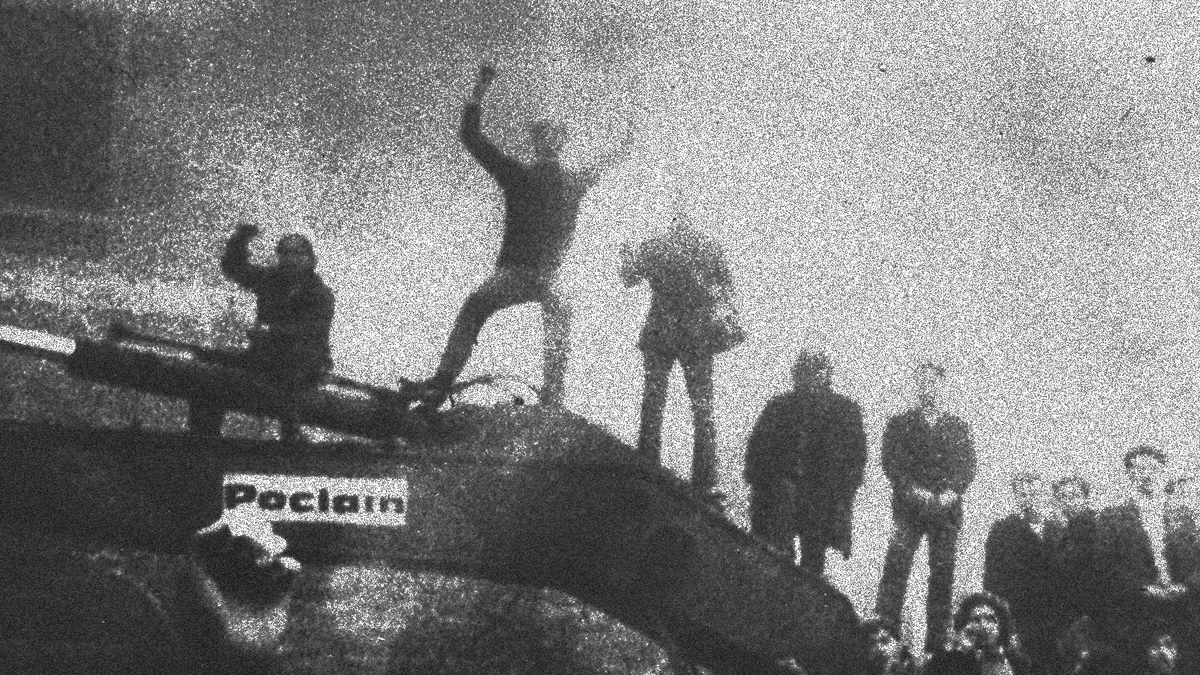
“An intense battle has begun to do away with that great relic of the past, the latifundium.” The line is delivered over a trembling shot of a densely forested path during a small scene in El pr imer año (The First Year, 1972), a film made by Patricio Guzmán the year Salvador Allende was elected the president of Chile. This particular latifundium, an agricultural estate in Cautín Province, has long been abandoned. There are no potatoes, no oats, not even a fence; its embankment has been left to the mud. Supported by the peasant wings of militant left parties, the Mapuche, the Indigenous people of the land, have been carrying out expropriations as part of an agrarian revolt all across the south, and the area has now been integrated into a nearby reservation, one of dozens of estates seized in this period. “The wood is rotting here, and they haven’t given us a single log,” a Mapuche man declares. The viewer is shown expanses of trees, plains, and water, which he asserts will be defended, whether the new government will side with them or not. Later, those working on the film are invited to a community gathering, where women and children assemble for food, music, and dancing. Horses are raced and woodwind instruments are played. These scenes last no more than ten minutes of the 96-minute film, but capture the aporia at the heart of Guzmán’s cinema: how to convey, at the same time, the subjective, natural, and organisational facets of a socialist development project. The First Year is a preliminary attempt at tackling this interrelation, in effect insisting the question of land to be its unavoidable predicate, the prospect of the ‘end’ of the fundo— that is, the end of extraction and primitive accumulation—threatening to rend Chile down the seams.Here, Guzmán begs the agrarian question, in this case, not just the role of the peasant classes in social transformation or the effect of capitalist restructuring on the land, but of primitive accumulation under settler-colonial conditions as such.
Born in 1941, Guzmán practised filmmaking at the Catholic University of Chile in Santiago and the Official School of Film in Madrid, returning to Chile with the intention of making a narrative film. Regional developments changed this plan, however; Allende’s election had shaken the continent, the streets were heaving, and a ‘Manifesto of the Filmmakers and the Popular Government’ had been published in 1970 by Allende’s party’s cinema committee, outlining a Chilean vision for a cinema of political commitment which stood against an ‘anaemic and neo-colonized culture’. Sensing in this a calling, Guzmán, then 31 years old, decided to film his first documentary feature, enlisting the help of a small crew, among them Toño Ríos, the film’s 18-year-old cameraman, and Felipe Orrego, its 24-year-old soundman and production manager. Their youthfulness carries forward to The First Year ’s images, which are caught up in revolutionary fervour. (In a diary entry from that year, Guzmán notes: ‘we were militants or left-wing sympathizers, and we had embarked on the greatest adventure of our lives. We filmed every day, even on weekends. We lived with our eyes open.’)Patricio Guzmán, ‘Chile Was a Celebration’ [1972], Notes from Diary of The First Year (2012). What results is a film of pure movement, haphazard and in a sense journalistic, a depiction of a country full of illusions and blooming with unalloyed enthusiasm.
The First Year proper opens on a stock market. It’s a fire sale; Chilean financiers are auctioning off and liquidating assets in a histrionic effort at economic sabotage, to “bring about disaster, so as to justify having announced it,” per the narration. Throughout the film, the audience is taken on a tour of denotative moments: the expropriation of more than half of Chile’s arable land and its remittance to its peasant labourers, presented alongside cadastral maps of Mapuche reservations; the normalisation of relations with Cuba and Fidel Castro’s visit on the one-year anniversary of Allende’s election; the nationalisation of coal, copper, nitrates, cement and of banking, told through interviews with workers at the Lota and Schwager coal mine, at Pacific Steel, at the port of Talcahuano, and at agrarian reform centres. What emerges is an overflowing text, pressurised by the ‘first difficulty’ of making a film about Chile which, per The First Year ’s opening narration, is ‘getting Chile to fit into the film.’
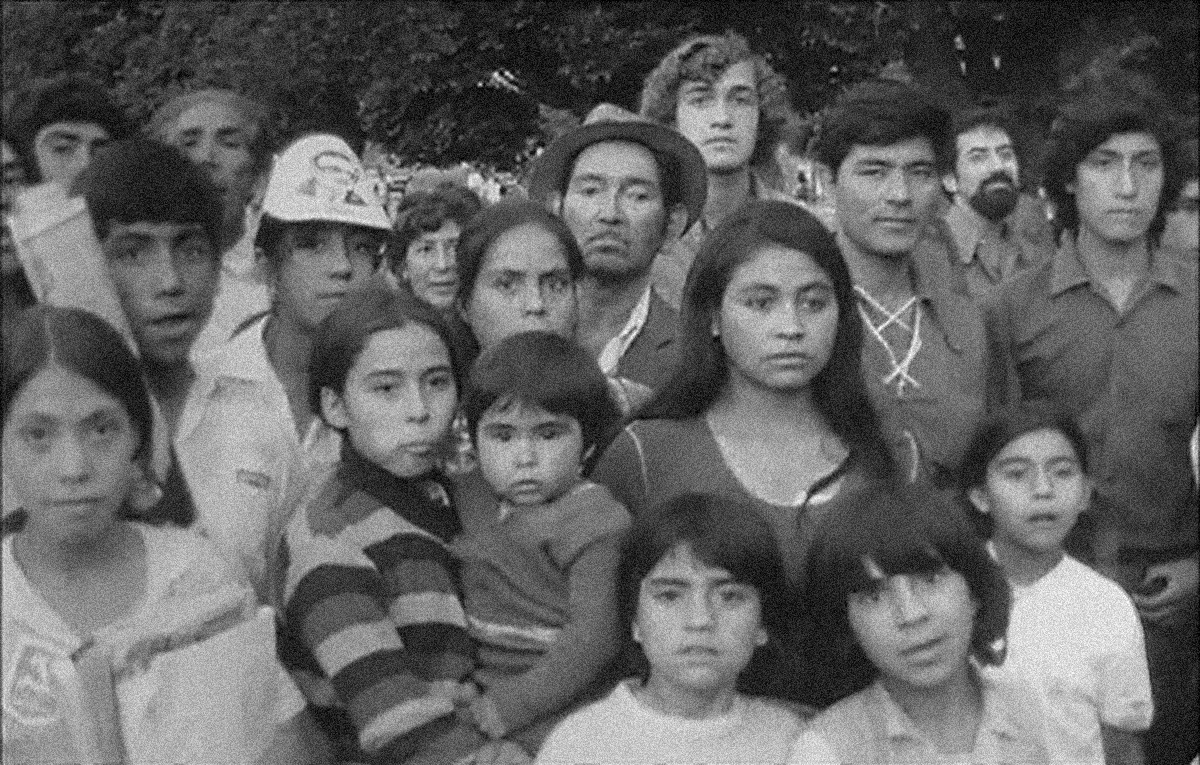 El pr imer año (The First Year, 1972)
You can feel the film straining under the weight of these forces. The operations of the West’s veiled protectorates stalk its frame: foreign debt commissions with their quasi-sovereign powers of taxation and spending controls, the designs of Western intelligence agencies, and the outposts of imperial capital that siphon from Chile’s rivers.Examples include Bretton Woods imposing loan conditions and spending limits on Mexico during its balance of payments crises of 1948–49, and on Chile in 1947.,David Priestland, ‘ Habits of Empire ’, London Review of Books , 45.15 (27 July 2023). Rather than attempt to represent these systemic enclosures, Guzmán produced an anti-claustrophobic film, a rejoinder to the flanking that had begun to encircle Santiago. The filmmaker has suggested that The First Year held ‘no greater ambition than showing the happiness of workers who toil with their hands,’ adding that this was a fundamentally ‘utopian’ vision, one that ‘impregnates’.Patricio Guzmán, ‘What I Owe to Chris Marker’, Sight & Sound online (10 February 2015); interview with author. In this sense, the film charts a course predestined by the necessary confrontation between impulse and project. It depicts a ‘positive’ programme for Chile—not just how people felt, but what they were fighting for—expressed at once with the conditions of its unraveling.
Knowing all that is to come makes for uncanny viewing. The First Year shivers with this anticipation, particularly during its final scenes, which portentously depict the makings of bourgeois revanchism: the campaigns to sabotage harvests and exhaust reserve stocks in order to manufacture a food crisis, the reactionary protests of the Chilean middle class, the film ending with the single-word postface: *¿FIN?*. Three years later, Guzmán will answer that question with images of Chilean naval carriers pulverising Valparaíso; shells raining down on La Moneda Palace; the people’s helmet-clad president bunkered down inside the old national mint; and Augusto Pinochet delivering a victory speech to the nation in his too-big clothes.
~
The First Year articulates several of the themes and surveys several of the theatres that will be central to Guzman’s next and best-known project, La batalla de Chile (The Battle of Chile, 1975–79), which is divided into three parts: La insurrección de la burguesía (The Insurrection of the Bourgeoisie, 1975), El golpe de estado (The Coup d’état, 1976), and El poder popular (Popular Power, 1979). Part one begins in March 1973, on the eve of the parliamentary elections that would fracture the existing balance of power, splitting the executive and legislative branches. The former is controlled by Allende—elected three years earlier in 1970—and the Unidad Popular (Popular Unity, UP) coalition, which is primarily comprised of the Partido Socialista (Socialist Party, PS) of Chile, the Partido Comunista (Communist Party, PC) of Chile, and the Movimiento de Acción Popular Unitario (Popular Unitary Action Movement, MAPU), a left group with a strong student base at the Catholic University. Chile’s Senate, on the other hand, is now led under a simple majority by a reactionary opposition, whose key factions are the Partido Demócrata Cristiano (Christian Democratic Party, PDC) and the right-wing Partido Nacional (National Party, PN).
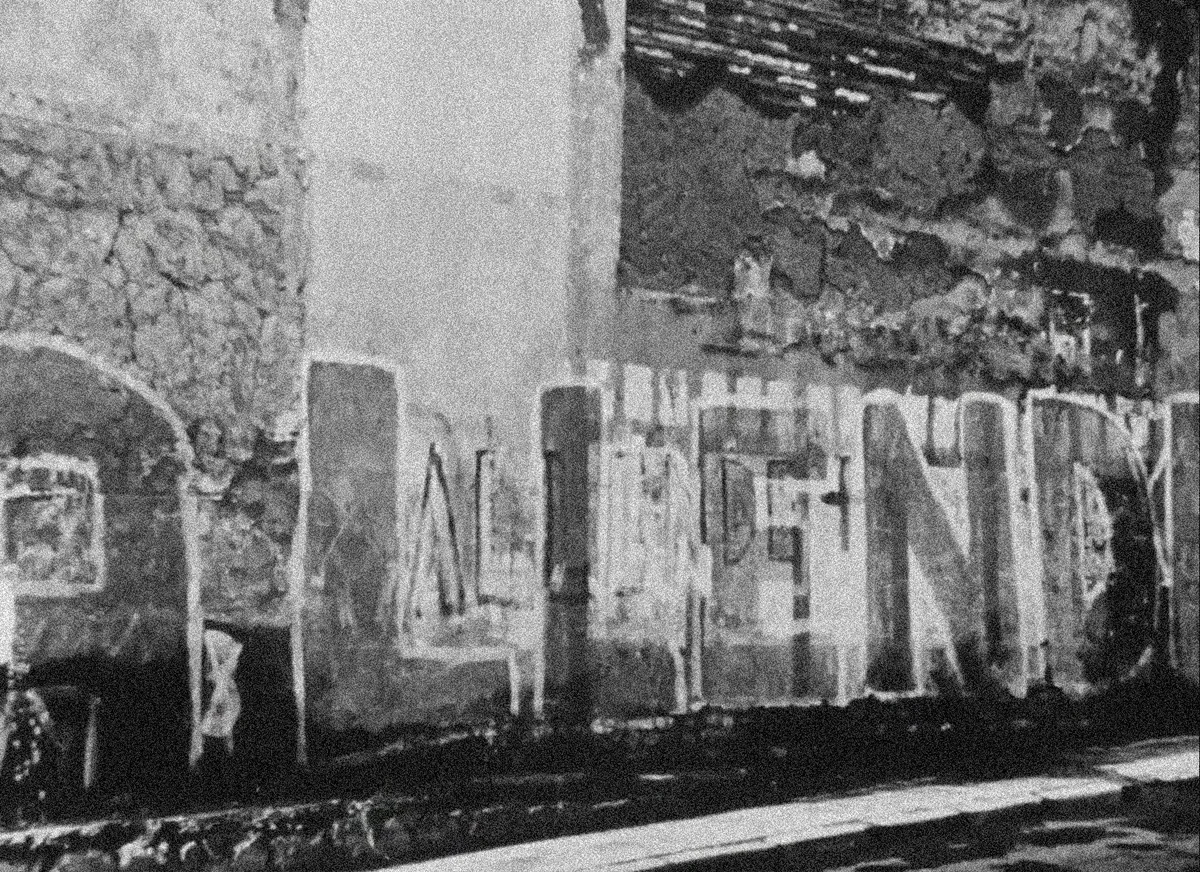 El pr imer año (The First Year, 1972)
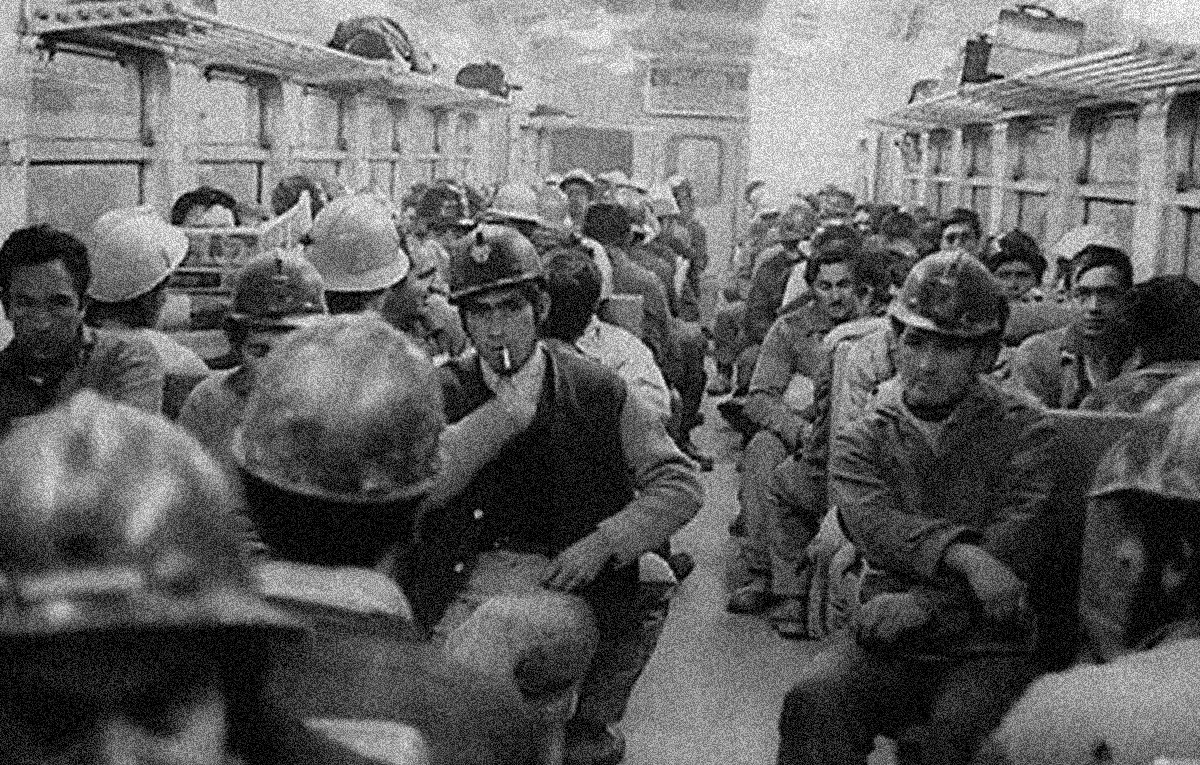
The first two parts of The Battle of Chile focus primarily on the responses of the Chilean bourgeoisie to Allende’s project, examining how the coup d’état came to be planned, justified, and carried out, as well as the various labour strategies employed to undermine the UP, including work stoppages, transport shortages, and strikes. Take, for example, the scenes of the unionised copper workers of the El Teniente mine—one of the three largest mines, all formerly owned by North American companies—calling for labour refusal and non-cooperation. The reactionary bloc understood that Chile’s looming balance of payments crisis would be decided in large part by the export of copper, which represented much of Chile’s foreign currency holdings, and turned accordingly to a syndicalist strategy of economic sabotage. The workers’ chants of Teniente, unido, jámas será vencido (‘the Teniente mine, united, will never be defeated’), whipped up by the Opposition, stir something complicated in us; after all, they sound like the revolutionary calls of the socialist project. Guzmán’s cinema demystifies this by showing how the labour aristocracy at these mines (whose workers were traditionally among the best remunerated), co-opted the languages and strategies of an organised left: in this same scene, the UP representative who implores the miners to return to work is met by a chorus of ‘Politics no!, politics no!’
After the experience of filming The First Year, Guzmán articulated a desire to develop a framework for understanding the events of 1970–73. In an ‘outline of reflections’ later published in Cine Cubano, Guzmán and the film’s crew summarised all that they had learned from the process of making The First Year, setting out its strengths and weaknesses, and developing an early vision for The Battle of Chile, which was originally intended to be titled The Third Year. Guzmán felt that The First Year ’s effort to ‘film everything that happens’ was impossible and ultimately incomplete; his hope for The Battle of Chile was to add the analytic base that The First Year lacked, while still preserving its ‘sensorial impact’, its ability to match the action itself.Patricio Guzmán, ‘Chilean Cinema’, trans. Christina Shantz, Ciné-Tracts , 3.1 (1980), p. 38. Guzmán and the team developed a theoretical general scheme; their intention was a threefold depiction of the exploitation underlying the economic struggle, the struggle between bourgeois and proletarian ideologies, and the political struggle against the state. In addition to this, there was a schematic shooting script, which outlined five ‘fronts’ to be depicted in the film.ibid., p. 44–49.
The First Year also introduced Guzmán to Chris Marker, who wrote its introductory French-language montage: a mini–film essay on the history and political economy of Chile, its narration laid over aerial images of the country’s topography and black-and-white archival shots of various key characters and events.Despite Marker’s influence on the production, form, and circulation of The Battle of Chile , Guzmán was also comfortable charting his own path. He describes La Spirale ( The Spiral , 1976)—another major documentary film about the Allende years; produced by Armand Mattelart, Valérie Mayoux, and Jacqueline Meppiel with narration by Marker—as having employed a ‘method opposed to ours’, namely, the ‘editing of material available and analysis a-posteriori ’. I have come to believe that it was not a French film about Chile that inspired Guzmán, but rather, a French film about France—namely Marker’s Le Joli Mai ( The Lovely Month of May , 1963). The similarities in style and form are uncanny; Marker’s film provided a cinema-verité treatment of the Parisian streets after the formal end to the war in Algeria, alongside a narrated essay. Notably, that film concludes with the prison, the clearing house for every social contradiction. This assessment has been echoed by others, but in the interview I conducted for this essay, Guzmán suggested that at the time of filming The Battle of Chile , the only film he had seen of Chris Marker’s was La Jetée (1962). In a letter to Marker in November 1972, Guzmán describes his desperate need for raw film stock, owing to the American economic blockade and the impending collapse of Chile-Films, a national film production company whose documentary workshop had become a haven for the left. Marker, for his part, responds to Guzmán’s pages with a telegram that reads, simply: ‘I WILL DO WHAT I CAN. YOURS. CHRIS.’ In his diaries, Guzmán recalls a parcel arriving from a Kodak factory in Rochester a month later with ‘43,000 feet (approximately 14 hours) of 16mm black-and-white film, plus more than 134 perforated magnetic tapes’ for a Nagra-4 tape recorder. At this point Guzmán and his team began filming, but after the coup of September 1973, Guzmán was held captive for 15 days in Santiago’s Estadio Nacional, a concentration camp for the imprisonment and torture of coup dissidents. He fled Chile for France where, through Marker, he met with the ICAIC, the Cuban national film institute, which agreed to provide support for the film. The completed footage was smuggled to Cuba and Guzmán would spend the next few years (between 1974 and 1977) editing and finishing The Battle of Chile from Havana.Critics have tended to connect The Battle of Chile to the Third Cinema movement, depicting the work in opposition to the hegemonic cinema of the imperial frontier proffered by Hollywood, and placing it alongside films made by the Mauritanian anti-colonialist Med Hondo, the Iraqi filmmaker for the Popular Front for the Liberation of Palestine Kassem Hawal, or the Bengal modernist Mrinal Sen. It is not that this is incorrect—though it must be said that the revolutionary African, Arab, and Asian filmmakers of the period were more deeply enmeshed in the Soviet filmmaking orbits than their Latin American counterparts—only that it underplays the central role played by Cuban film infrastructures in the production of the film. The film could not have been made without Marker, both practically and formally—its structure planned in large part to account for the stock precarity and to ensure precision in what and when to shoot.Guzmán, ‘What I Owe to Chris Marker’.,One could view this as part of a longstanding commitment of Marker’s, him having experimented with providing 8mm cameras to groups of labourers in France.
The editing team decided on a mostly chronological order and dialectical logic for the film, which shares time between the narratives of the UP and the Opposition across the five aforementioned fronts: the market, the parliament, the student movement, the employers, and the labour movement. It is a potent combination: an agitated cinema layered with the “serene metal” of the socialist voice, as Allende put it in his final broadcast on loyalist radio before he and its channels, too, were silenced. Guzmán believed that the cinematographic form best able to narrate the path towards socialism would be that which grasped the richness of reality but also provided an analysis of its social forms. In the film, this is represented through the clash between bourgeois reaction and a popular struggle attempting to constitute itself in real-time. For instance, when the U.S.-trained bus owners’ association of Chile calls for an indefinite strike of over 5,000 private buses and trucks to hobble the economy, the film shows the left cobbling together a workers’ recovery movement to provide public transport carriers and factory trucks to address the stoppage; food hoarding strategies are met with a ‘people’s basket’ to provide for the poor; and so on. One could describe this particular formal choice as the depiction of the process of problems—the old Imperfect Cinema mantra.Guzmán was influenced by Cuba’s Imperfect Cinema movement and cited Cuban documentarists like Julio García Espinoza (a founder of the ICAIC) and Santiago Álvarez as inspirations. More than just a theoretical contribution, this is a method for understanding history and power in its absent totality.The film theorist Salomé Aguilera Skvirsky has suggested that The Battle of Chile is Guzmán’s ode to Karl Marx’s Eighteenth Brumaire of Louis Bonaparte (1852). Besides the clear parallels detailing the historical processes of revolution and revanchism—Marx’s Brumaire opening with the 1848 revolution of the French Second Republic and ending with Bonaparte’s coup d’état three years later—Skvirsky is more interested in the methodological and ‘literary’ connections between the two. She writes in one passage that neither text argues ‘for socialism on its merits’, that instead they concern themselves with how power ‘moves in multiple directions’, serving as an ‘exposé of unseen levers of power’ that function through various groups which, in turn, ‘include not merely classes or quasi-classes—the peasantry, the proletariat, large landholders, the aristocracy of finance—but also political forces that were sometimes coextensive with particular classes and sometimes divided among them’. Salomé Aguilera Skvirsky, ‘ The Eighteenth Brumaire of Patricio Guzmán ’, Jump Cut , 61 (Fall 2022).
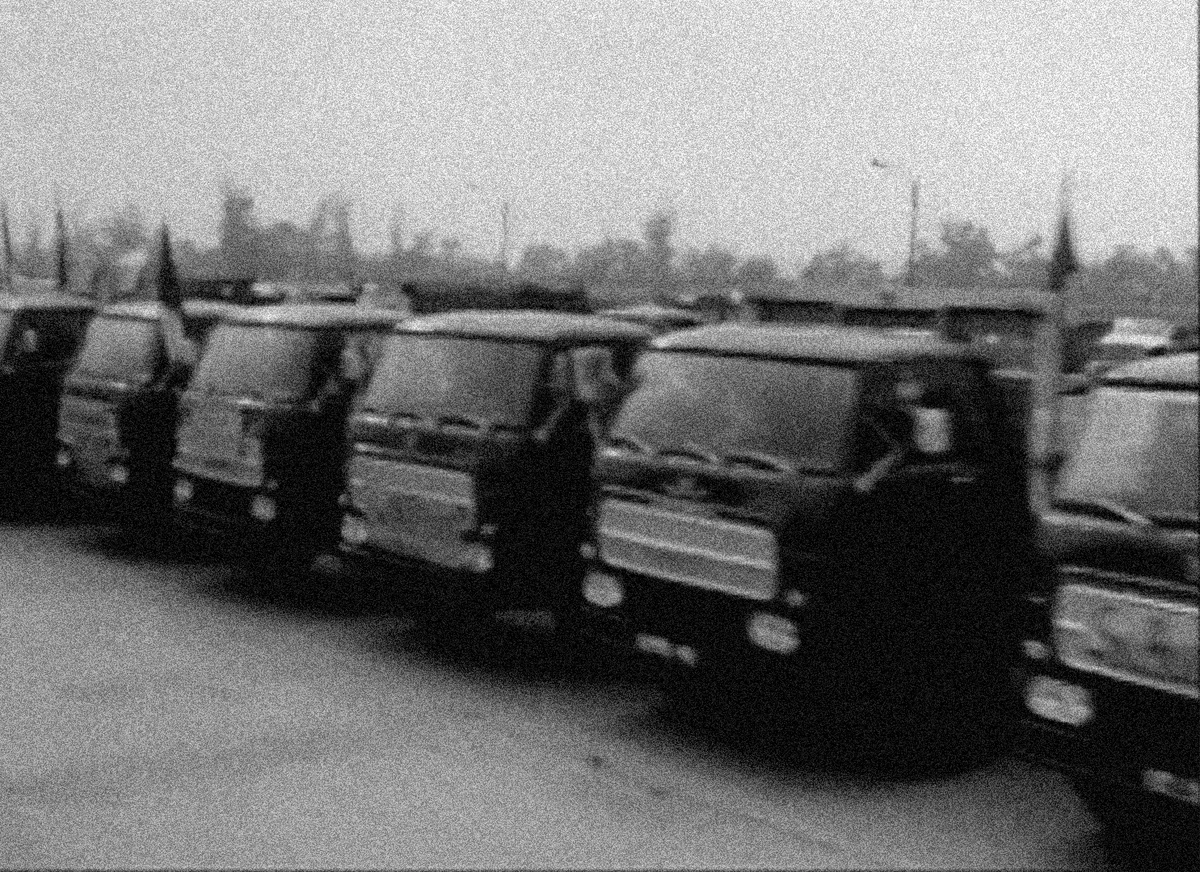 _
_ La batalla de Chile_ : La insurrección de la burguesía (The Battle of Chile : The Insurrection of the Bourgeoisie, 1975)
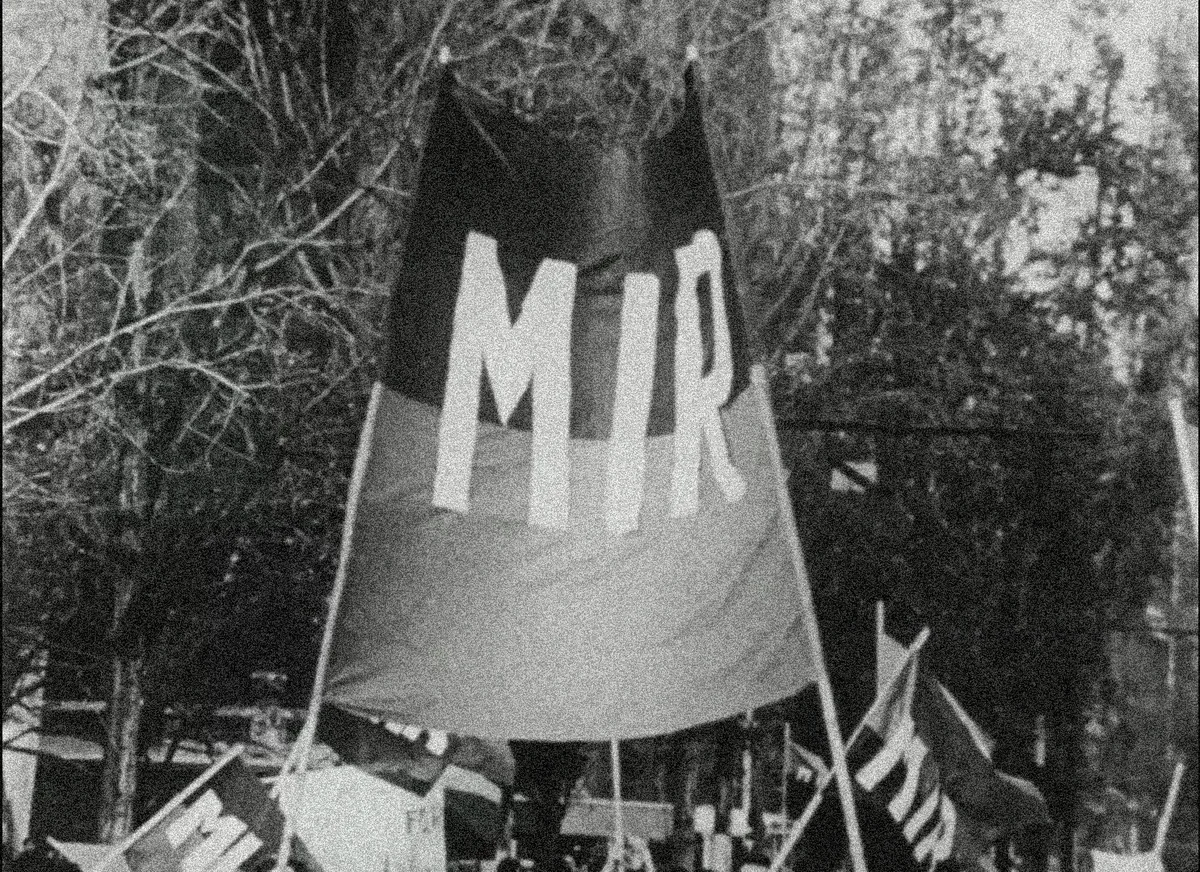
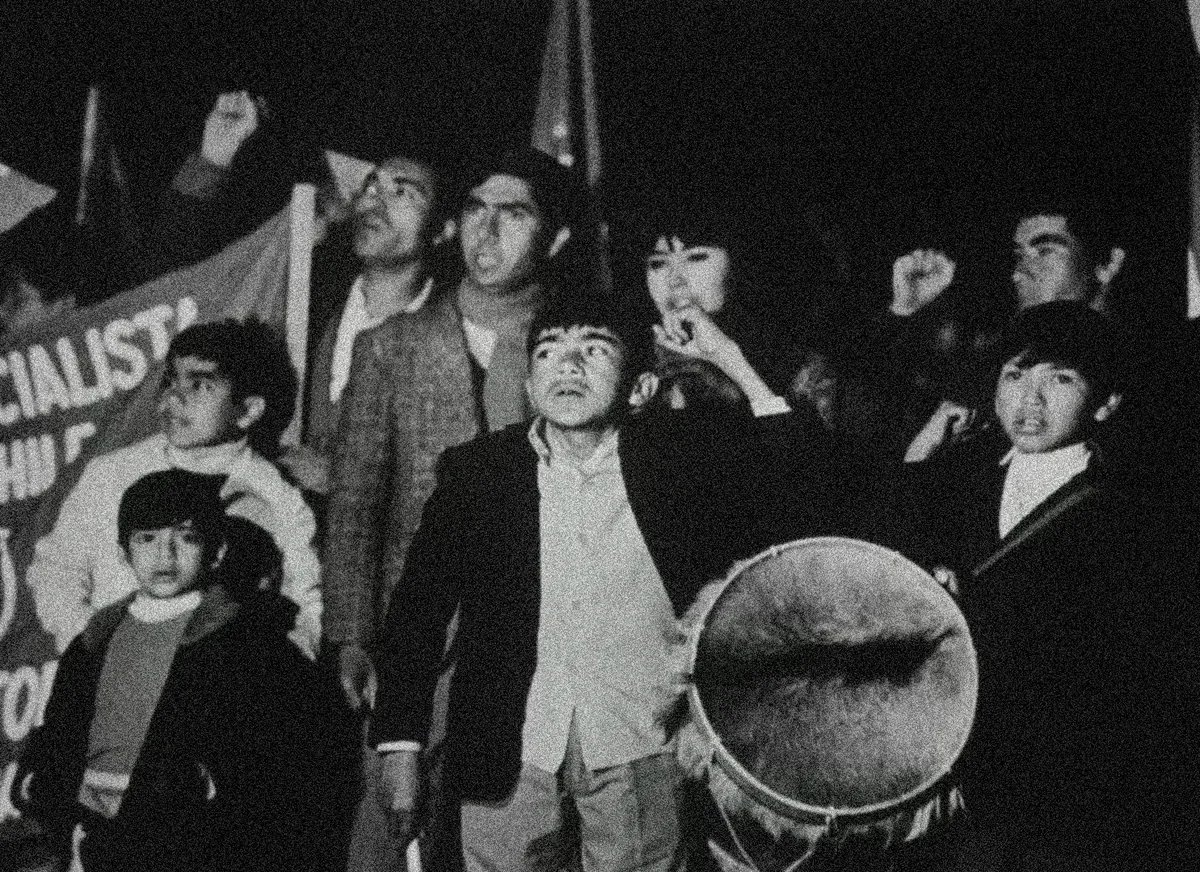
Guzmán’s films, therefore, operate on a dual plane. On the one hand, they present the viewer with a system for understanding class war in Chile. But also, and just as importantly, they engage the viewer in the struggles around socialist strategy that happened within the left, depicting the actual debates around operatividad— the application and granular functionings of worker management—in order to distil the contradictions between the popular base and party system. With regards to the latter, the transition in Guzmán’s filmic project from The First Year to The Battle of Chile directly parallels that of Allende and the UP post-1970: the initial energies of the revolutionary victory had left the reactionary parties off-balance and flecked by hysterical spittle; as they regrouped around an economic and political strategy, the left, too, required its own renewal to involve the labouring poor in a sustainable revolutionary programme.Eric Hobsbawm, ‘ Chile: Year One ’, New York Review of Books , 17.4 (23 September 1971). This meant the organisation of the pobladores (landless urban poor) around the question of land, which had been a consistent site of struggle for many of the major parties, whether the PCD’s junta de vecinos (neighbourhood councils) or the Movimiento de Izquierda Revolucionaria (Revolutionary Left Movement, MIR)’s strategy of toma de terreno (land takeover).Marian Schlotterbeck, ‘The challenge of radical democracy in Allende’s Chile’, Radical Americas , 6.1 (2021). Such an effort would prove difficult to consolidate under a UP coalition fractured between a measured presidentialism and a militant left current agitating for accelerated land reclamation and worker occupations. One could argue that this tension between revolution from above and from below is in fact a primary ‘battle’ of the fronts in The Battle of Chile. As the Chilean economist and MIRist Claudio Jedlicki puts it, the role of the peasants, the Mapuche, and the MIR ‘accelerated the process far beyond what was intended’,‘ Br ead, Land, and Socialism: An I nterview with Claudio Jedlicki ’, Cosmonaut (15 August 2022). their para-state and extra-state strategies outstripping the bounds of the parliamentary system.The MIR-affiliated mass front, the Frente de Trabajadores Revolucionarios (Revolutionary Workers Front, FTR), for instance, agitated on the question of direct worker representation. (Here, we might recall the Mapuche in The First Year : “The fundo owners did not buy the land and now we have to pay them. Why? … The history of Chile tells us we are the true Chileans. Chilean history. Is that a lie?”)
 El pr imer año (The First Year, 1972)
These challenges are perhaps best encapsulated in an extended back-and-forth in part two, during a meeting between an official from the PC- and PS-dominated national labour federation, the Central Única de Trabajadores (Chilean Trades Union Congress, CUT), and the workers of the cordones industriales (industrial belts), a type of democratic labour formation representing all the factories in a given area. In light of the sub-fascist front Patria y Libertad (Fatherland and Liberty)’s involvement in the failed coup attempt of June 1973 (known as el tanquetazo, or “the tank putsch”) and the military’s escalation of unauthorised searches of factories for arms, CUT had called for workers to occupy factories and prepare for the worst. This would later be undermined by Allende and the UP, who enacted a rollback of the factory requisitions as part of a series of defensive concessions to the PDC in order to avoid a constitutional ‘crisis’.
The workers in the scene are upset by this. No doubt coloured by the Western-backed 1973 coup d’etat in Uruguay and, most importantly, Francoist Spain, they argue that the writing is on the wall for a peaceful and democratic path to socialism. Now is the time to arm and develop a plan for nationwide coordination of the popular defence committees in order to protect and advance the revolutionary project. The key site of contradiction here is of ‘dual power’, or more specifically, how and to what extent there ought to be coordination between the parties and the workers. While ultimately respectful of Allende, the left’s critiques of the UP generally revolved around a few claims: that the UP’s project was ‘non-socialist reform’, citing the similarities in agricultural policy between Allende and the previous PDC-aligned president; that the UP’s quota-system clientelism would prove a structural barrier to the full transfer of state power to the popular masses; and that the UP did not take seriously the need for armed resistance against a possible coup by a military enmeshed in a variety of U.S. intelligence cooperation programs. All of these tensions are explored in The Battle of Chile. Each personality the film depicts stands in for their respective social forces, all clamouring atop the blasted landscape of the Southern Cone.
~
Guzmán’s films operate associatively and vividly. Here we are presented with a kaleidoscopic Chile—its land, its workers; their hopes and struggles; all that feeling and image funneling into a whole. This whole is necessarily contingent, certainly a slice of Guzmán’s particular educated and urban class position, but also a type of representation aimed at the depiction of ‘a dynamic fresco’, as Guzmán puts it in the letter to Marker. This world vision informs much of Guzmán’s work, and carries forward to his contemporary trilogy of landscape films about the anthropocenic afterlives of empire— Nostalgia de la luz (Nostalgia for the Light, 2010), La Cordillera de los sueños (The Cordillera of Dreams, 2015), and Mi país imaginario (My Imaginary Country, 2022)—which, while formally different (ponderous, personal, pastoral even), nevertheless maintain the older films’ commitments to a sense of scale.
The marked exception is Chile, la memoria obstinada (Chile, Obstinate Memory, 1997), a tighter, smaller, and more curious film that burrows into the interstices of commitment and martyrdom. In Obstinate Memory, Guzmán returns to his home for the first time in years, in order to screen The Battle of Chile —still largely unseen in the country—and to reconnect with some of the film’s protagonists. It begins right where part two ended: the ‘reestablishment of public order’ after ‘three years of suffering the Marxist cancer’, as put by junta generals César Mendoza and Gustavo Leigh. In this case, Guzmán walks La Moneda—the seat of the president—with one of the ‘Grupo de Amigos Personales’ militants that served as Allende’s armed guard during his final moments, whom Guzmán disguises as a crew member. Shots of the stadium—prison stretch out ominously. Through interviews, old comrades describe the aftermath of the coup: “They took them away and they never came back … their bodies were found this year in row 29 of the cemetery.” Another adds, “Some didn’t reappear; those who did were in pieces.” These men and women are among the many thousands tortured and murdered, and the tens of thousands imprisoned, most of whom were peasants. Chief also among the film’s subjects is Jorge Müller Silva, a member of the MIR and one of The Battle of Chile ’s cinematographers who was disappeared by the junta in 1974 alongside his wife.Patrick Blaine, ‘Representing Absences in the Postdictatorial Documentary Cinema of Patricio Guzmán’, Latin American Perspectives , 40.1 (2013); Thomas Miller Klubock, ‘ History and Memory in Neoliberal Chile ’, Radical History Review , 85 (Winter 2003). Each of its three parts is dedicated to him. Obstinate Memory ’s careful treatment of this accumulated loss is not some sort of gesture to an aborted national story, but rather an acknowledgement of threads that linger after they are pulled and frayed.
It is appropriate then to understand Obstinate Memory as the second of two bookends—the first being The First Year— to The Battle of Chile ’s central analyses; each in turn a sonnet to revolutionary optimism and revolutionary loss. Obstinate Memory is itself a resolute reminder that time continues. Through interviews, it shows the women and men who still live with the shattering absences of their disappeared family members, making do with the communities they have. Some critics have argued that the film is undermined by its seeming unwillingness to contend with those who continued the struggle after the coup, who stand in the lineage of the revolutionaries that came before.This is a surprising claim, given Guzmán’s treatment of the very subject in one of his next films, Le cas Pinochet ( The Pinochet Case , 2001). This is perhaps the curse of the filmmaker’s stature, which foisted expectations upon a film formally unable to meet them: arrested by loss like his interview subjects, Guzmán had yet to make his peace with the failures of the original project, two decades later. I take the film, instead, as it is offered to us: a personal document concerned with honouring the past—one that will always be stalked by the stories it cannot hope to capture, nibbling at the periphery. The inability of the social life of the film to fully integrate into the social life of the martyrs’ families is, to my mind, a productive site of inquiry; far from a formal failure, it reminds us that political and cultural memory are at risk of atrophy, without a revolutionary project.
Obstinate Memory ’s subject is the challenges of such a reconciliation. It tells the story of the national vitiation of any organised recollection of the Allende years—much of it a product of Pinochet’s shock doctrine, yes, but also of something psychic, an adaptive social response to the brutal recriminations. Such are the shelf lives of class war. With some exceptions, Pinochet and his Chicago Boys undid many of the reforms implemented under Frei and Allende, remaking the nation in the image of the Washington Consensus: spearheading mass export-oriented privatisation, strengthening agribusiness, dismantling the public education system, and introducing a long-term leasing regime which once again allowed foreign multinationals to control the majority of Chilean copper exports, paying minimal royalties and even less in taxes.Manuel Risco, ‘ Is Pinochet Dead? ’, New Left Review , ii.47 (September/October 2007).,Manuel Risco, ‘ Chile, A Quarter of A Century on ’, New Left Review , i.238 (November/December 1999). To this, there was resistance—strikes and bombings, land takeovers and political imprisonment. But there were also those who couldn’t or wouldn’t raise the fist any longer. They were subjected to an alienated hangover: wide-scale displacement of the labouring poor from their lands swelled the ranks of the pobladores, who were sick of unfulfilled promises and advanced retribution. It is in these communities that much of Chile’s history has been fought: a spoke in the recursive cycles of recent years, which saw the defeat of the proposal for a new Chilean constitution and a return to the question of public benefits, the buses this time burnt by the student movement and the Mapuche in the south.Itself a provisional document, in some respects more conservative than the junta’s own 1980 constitution in its undermining of the right to resource nationalisation.
For those men and women adapting to new terrains of struggle, we might understand films like The First Year or The Battle of Chile as guides, and therefore threats to the ruling class. What, then, to do with older works, when enemies seek their erasure, or else their exhibition as monuments to revolutionary folly or bygone glory? One option is to hope for the films’ lasting agitational value—a cinema for doing things or making things—but as an epilogue, Obstinate Memory, appears altogether ambivalent about this prospect. In a scene at one of the only schools that would agree to screen his earlier work, Guzmán’s depiction of the reception is blunt and unsentimental, the mostly upper-class youth parroting talking points about stability and the follies of Marxist utopianism a far cry from the students in Montevideo who, after watching Mario Handler’s film Me gustan los estudiantes (I Like Students, 1968), were moved to raise barricades.Octavio Getino and Fernando Solanas, ‘Toward a Third Cinema’, Tricontinental , 13 (1969), p. 122.
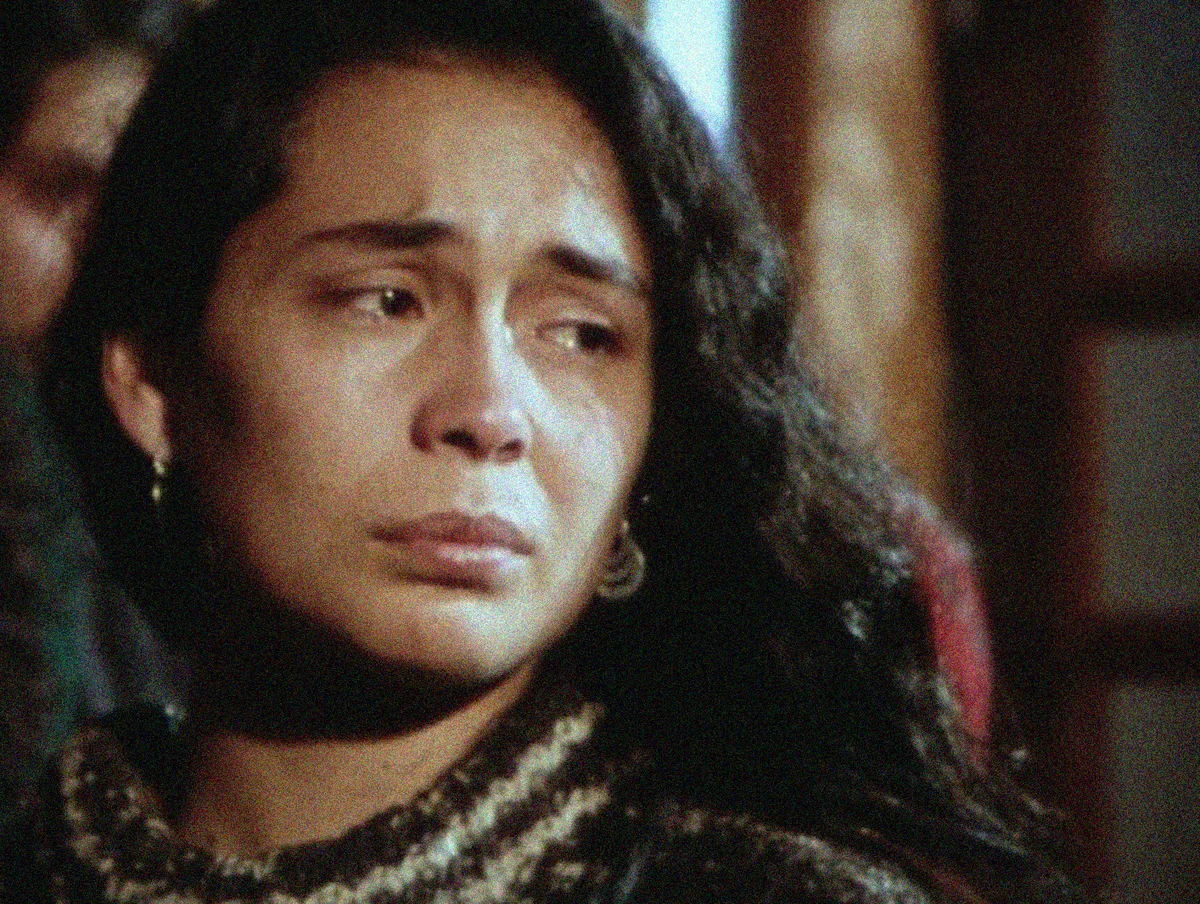 Chile, la memoria obstinada (Chile, Obstinate Memory, 1997)
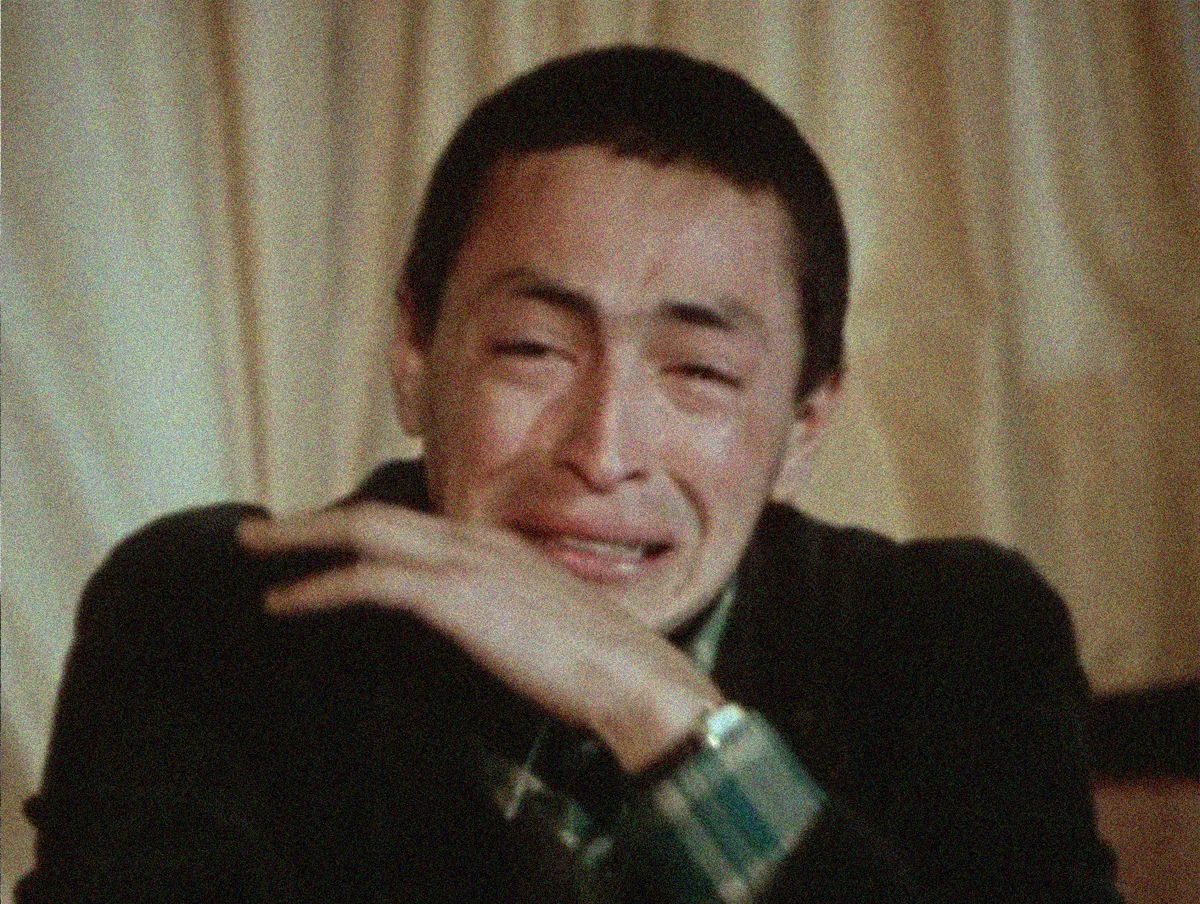
The other approach is to understand, preserve, and communicate the films’ dialectical methods, in the hopes that they will be taken up and adapted by the next motivated cadre. Guzmán certainly believed that to do this would require a ‘direct cinema’, intimate with the lives of the worker, and never too aloof. No doubt, the outcomes of such a thing are hard to predict. In the final moments of Obstinate Memory, Guzmán and Ernesto Malbrán gather their own audience of young people to watch The Battle of Chile, and we learn that they are some of the sons and daughters of the disappeared.His words are the film’s coda: “We should accept to be the memory, living witnesses for the young people looking everywhere for something to hold onto. They should know that the coup d’etat was not a shipwreck, but a small earthquake, nothing else.” That realisation is untelegraphed, catches us unaware. As the lights come up, most every face is riddled with tears. “I now feel I am part of this process,” one man says, while another’s face contorts in a horrible spasm, his mouth opening and closing in disbelieving rage. We are meant to understand that people have not so much forgotten, as have been willed to forget. There is political struggle implied.
Kaleem Hawa writes about art, film, and literature.